

 Skip to content
 As the UK’s electricity network continues to evolve, reliable and durable infrastructure has never been more important. Whether supporting new housing developments, commercial premises, renewable energy projects or EV charging infrastructure, feeder pillars play a vital role in safely distributing electricity across the network.
At Adept GRP Cabinets, we manufacture high-quality GRP feeder pillars, kosks, cabinets and enclosures designed to meet the demands of modern electrical installations, providing long-lasting protection for critical equipment in even the harshest environments.
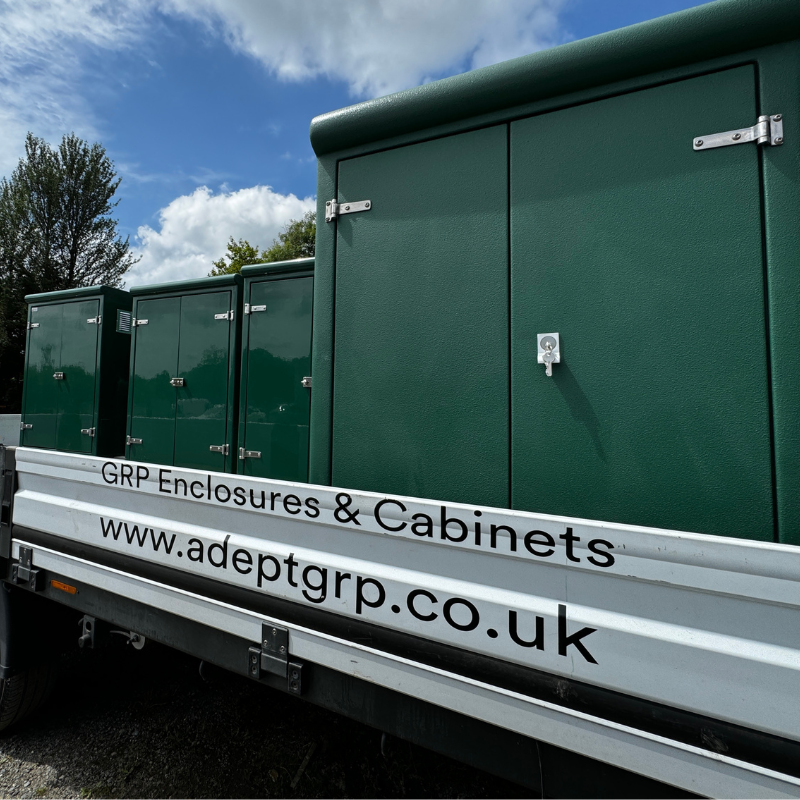
A Distribution Network Operator (DNO) feeder pillar is a cabinet or enclosure that houses electrical distribution equipment used to safely control and distribute power from the local electricity network.
Installed throughout the UK, feeder pillars form an important connection point between the electricity distribution network and downstream electrical systems. Inside, they typically accommodate equipment such as:
These components allow engineers to safely isolate circuits, provide fault protection and distribute electrical power where it’s needed.
Feeder pillars are found across a wide range of sectors and infrastructure projects, including:
As demand for electricity grows, particularly through the transition to low-carbon technologies, feeder pillars are becoming an increasingly important part of the UK’s electrical network.
While feeder pillars have traditionally been manufactured from steel, Glass Reinforced Plastic (GRP) has become the preferred material for many applications due to its durability, low maintenance requirements and excellent environmental resistance.
Unlike steel, GRP will not rust. This makes it particularly suitable for coastal locations, industrial environments and areas exposed to moisture or chemicals.
GRP offers an excellent strength-to-weight ratio, making transportation, handling and installation easier without compromising structural integrity.
GRP is naturally non-conductive, providing an additional level of safety for electrical installations.
Designed to withstand the UK’s varied climate, GRP resists UV degradation, heavy rainfall, frost and temperature fluctuations without deteriorating over time.
Because GRP does not corrode or require regular repainting, maintenance costs throughout the product’s lifespan are significantly reduced.
A well-manufactured GRP feeder pillar can provide decades of reliable service, making it a cost-effective investment for infrastructure projects.
While feeder pillars have traditionally been manufactured from steel, Glass Reinforced Plastic (GRP) has become the preferred material for many applications due to its durability, low maintenance requirements and excellent environmental resistance.
Unlike steel, GRP will not rust. This makes it particularly suitable for coastal locations, industrial environments and areas exposed to moisture or chemicals.
GRP offers an excellent strength-to-weight ratio, making transportation, handling and installation easier without compromising structural integrity.
GRP is naturally non-conductive, providing an additional level of safety for electrical installations.
Designed to withstand the UK’s varied climate, GRP resists UV degradation, heavy rainfall, frost and temperature fluctuations without deteriorating over time.
Because GRP does not corrode or require regular repainting, maintenance costs throughout the product’s lifespan are significantly reduced.
A well-manufactured GRP feeder pillar can provide decades of reliable service, making it a cost-effective investment for infrastructure projects.
As electricity networks become more complex, feeder pillars are expected to accommodate increasingly sophisticated electrical equipment.
Modern DNO connection projects often require enclosures capable of housing:
This means the enclosure itself must provide not only physical protection but also the flexibility to support future upgrades as electrical infrastructure continues to evolve.
A feeder pillar is expected to protect critical electrical equipment for many years, often in exposed outdoor environments.
Choosing a well-manufactured GRP enclosure helps ensure:
Attention to detail in the manufacturing process, from material selection through to assembly and quality control, helps ensure every enclosure performs as intended in demanding real-world conditions.
No two infrastructure projects are identical. While standard enclosure sizes suit many applications, bespoke feeder pillars can be manufactured to accommodate specific equipment layouts and project requirements.
Customisation options may include:
This flexibility allows contractors, utility companies and electrical engineers to specify an enclosure that meets the exact needs of their project.
When specifying a feeder pillar, it’s important to work with a manufacturer that understands the demands of the electrical infrastructure sector.
Look for a supplier that offers:
A dependable manufacturing partner can help keep projects on schedule while ensuring the enclosure is built to the required specification.
This flexibility allows contractors, utility companies and electrical engineers to specify an enclosure that meets the exact needs of their project.
As investment continues in renewable energy, electric vehicle charging, battery storage and network reinforcement, the demand for robust, durable feeder pillars will only continue to grow.
GRP feeder pillars provide a practical, long-lasting solution that helps protect essential electrical equipment while reducing maintenance and supporting reliable power distribution across the UK’s electricity network.
At Adept GRP Cabinets, we manufacture high-quality GRP feeder pillars designed to meet the needs of contractors, utilities and infrastructure projects throughout the UK. Whether you require a standard enclosure or a bespoke solution, our team can help you find the right product for your application.
If you’d like to discuss your next project or learn more about our range of GRP feeder pillars, get in touch with our team today.
One of the most important considerations when planning a new electrical connection is timing. DNO connection appointments are often booked well in advance, and rescheduling them can lead to additional costs, project delays and disruption to other contractors working on site.
At Adept GRP Cabinets, we always recommend ordering your GRP feeder pillar in good time to ensure it is delivered well before your scheduled DNO connection date. Having the feeder pillar on site and ready for installation helps keep your project on track and reduces the risk of expensive delays if the connection has to be postponed due to missing equipment.
By planning ahead and allowing sufficient time for manufacture and delivery – particularly for bespoke feeder pillars – you can help ensure your DNO connection proceeds as scheduled, avoiding unnecessary costs and keeping your project moving.
Our team is happy to discuss lead times at the quotation stage, helping you select the right feeder pillar and delivery schedule to align with your project programme. A little forward planning can save significant time, cost and disruption later in the project.

Loading AI summary...